

SMS Short Codes
Learn what SMS short codes are, when to use short codes for texting, and the benefits they offer businesses for SMS marketing.

Learn what SMS short codes are, when to use short codes for texting, and the benefits they offer businesses for SMS marketing.
A short code is a 5 or 6 digit phone number that is used to send text messages at scale. Short codes are capable of sending extremely high volumes of text messages in a short period of time. This makes them the optimal choice for brands needing to reach large audiences.
People can opt into SMS marketing programs by texting a word or phrase known as a "keyword" to a short code. They are meant to be shorter than normal phone numbers to make the opt-in process easier.

Here are the some of the most common reasons you may use a short code over a toll-free number or 10-digit long code:
Short codes support significantly higher sending speeds, allowing you to deliver large volumes of text messages in the shortest period of time. This is especially important when you have time-sensitive messages that need to be delivered at scale.
Short codes go through a carrier approval process before they’re activated. Because of this upfront vetting, messages sent from short codes are less likely to encounter filtering or spam blocks that can affect other types of sending numbers.
Short codes bring more credibility to your brand when you are texting. It’s the number type most often selected by the most recognizable brands in the world.
If you have a high volume of messages to send, short code texting might be the best choice for you. Consider these common use cases:

There are two different types of short codes used for mass text messaging: random and vanity. They’re the exact same in terms of their functionality and capabilities. The only differences are the number and associated costs.
Random short codes are automatically assigned 5- or 6-digit numbers. You can’t choose the number, but they’re the most affordable option and the most common choice for businesses.

Vanity short codes, like customized license plates, allow you to choose your own number for easier brand recognition and recall. Many businesses pick repeating or memorable numbers like 222444.
While they may be easier to remember and can provide brand recognition, vanity short codes cost more than random short codes. The U.S. Short Code Registry charges a premium for you to select and maintain the number of your choice.
Short codes aren’t purchased—they’re leased. Leasing gives your business exclusive use of a specific number for SMS campaigns. Short code leases are billed on a quarterly basis by the U.S. Short Code Registry and payments can be made through your SMS marketing service.
Short code pricing depends on whether you choose a random or vanity code. Vanity short codes usually cost $500 more per month than random codes.
Interested In Getting Started? Let's Talk!
Securing an SMS short code with SlickText requires a one-time carrier setup fee and a minimum plan price of $319 per month unless otherwise noted.
There are several key differences between SMS short codes and other numbers used for text message marketing, such as toll-free and 10DLC numbers.

Short codes are only 5 or 6 digits vs. the others that are 10. This makes opting into texting programs simpler because the number is easier to remember and quick to type out. However, marketers can use tools like tap-to-join links and QR codes to make it very easy for people to subscribe to a text program despite the length of the number.

Short codes are the most expensive option, typically costing between $500 and $1,000 depending on whether you choose a random or vanity code. Commercial 10DLC and toll-free numbers have much lower fees, with toll-free numbers often available at little to no monthly cost.
You can usually count on better delivery with SMS short codes. They typically send at much faster speeds. Short codes are also not subject to the same level of content and spam filtering as the 10-digit alternatives, reducing the chance that messages will be blocked. In order to provide better delivery and less filtering, short codes have a more rigorous registration process. This process typically takes about 4 weeks or more during which the number is not available for use.
While short codes have traditionally been the gold standard for deliverability and brand recognition, businesses can now add RCS (Rich Communication Services) to toll-free, 10DLC, and short code numbers. RCS enables a Verified Sender Profile that helps recipients immediately recognize your business, increasing trust and helping your messages stand out—even when using a standard 10-digit number.
| Short Code | Toll-Free | 10DLC |
| 5 or 6 digits | 10 digits | 10 digits |
| $500 - $1,000 per month | Free | $10 per month |
| 500+ messages per second | 25-50 messages per second | Typically the slowest option |
| No carrier filtering | Carrier filtering | Carrier filtering |
| 4 to 5 week approval time | Same day to 48 hour approval time | 1 to 5 day approval time |

There are several steps to securing your own short code, but SlickText can handle all of it for you.
The first thing we need to do is lease the code from the U.S. Short Code Administration. If you’re looking for a vanity short code, we’ll search the available numbers for you and attempt to get your ideal number. We make the first lease payment at this time. Leases are typically paid for on a quarterly basis.
When we initially lease the short code, it's not yet ready to send messages. The next step is to have it provisioned and approved by all of the wireless carriers. This part of the process can take several weeks, but SlickText employs techniques that can greatly reduce the time this takes.
The approval process starts when we work with you to complete and submit a short code application. Once all of the carriers have approved the application, we activate it in your SlickText account, and you can begin sending text messages.

When it comes to short code texting, SMS compliance is critical. The good news is that being compliant is not difficult.
The CTIA is a nonprofit trade association that represents the wireless carriers in the United States. Similar regulating groups exist in other countries. For example, the Canadian Telecommunication Association administers short codes in Canada through its txt.ca program. The CTIA was set up to develop, maintain, and enforce best practices for short code texting. They actively audit SMS short code programs in the US to ensure companies are following the rules and to protect consumers. They are largely focused on things like making sure people who are receiving texts have opted in, SMS marketing programs are disclosing the correct compliance verbiage, and that short codes are sending content that's not in violation of their guidelines.
The TCPA, or the"Telephone Consumer Protection Act", is the set of laws in the United States that restrict telephone solicitations, including voice calls and text messaging. In Canada, the CASL, or Canada’s Anti-Spam Legislation, regulates the sending of a commercial electronic message, or CEM. The core focus of these laws is to prevent consumers from receiving unwanted spam texts and phone calls. There are potentially large financial consequences for sending text messages to people who have not opted in, so it's critical that your short code texts are only to people who have explicitly consented to receive them.
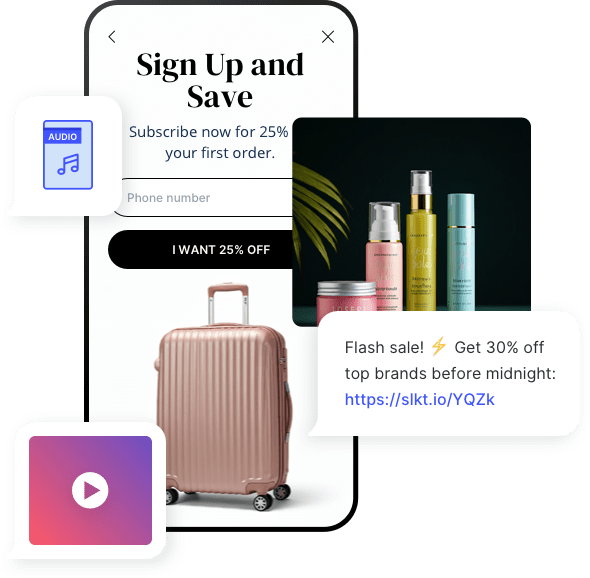
Short code texting is very similar to any other type of SMS or MMS. The only difference is that with short codes, you can send much larger text broadcasts and the message content is not typically filtered. This is because the sender using the short code and their content has been pre-approved by the wireless carriers during the provisioning process.
With short code texting, SMS messages are still priced based on 160-character segments. If your message exceeds 160 characters, it can still appear as a single message on the recipient’s device, but it may be billed as multiple SMS segments. MMS messages typically cost more per send, but they support up to 1,600 characters and can include multimedia such as images, GIFs, and videos. Also note that if you want to use MMS marketing, your short code will have to be set up for MMS specifically. Short code MMS doesn't have to be enabled when you first provision the code. It can be done at any time, although it's best to do it when it's first set up.
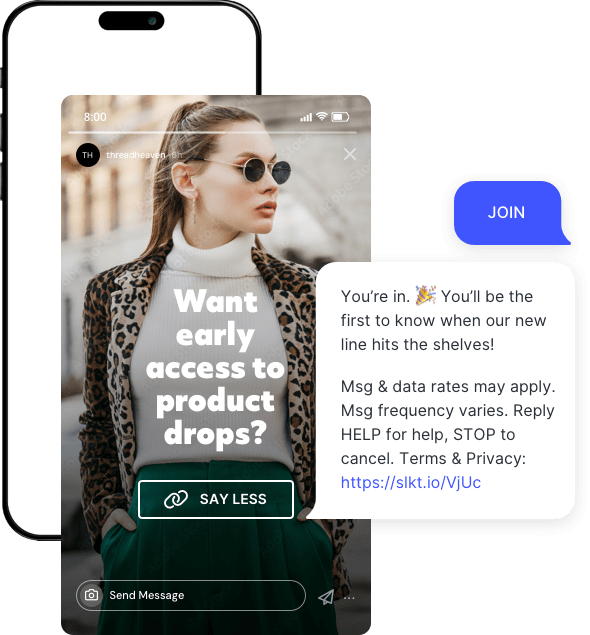
Opting into a short code is fairly straightforward. Technically, you’re not opting into a code, you’re opting into a text messaging program that uses an SMS short code as its number. In most cases, people opt into SMS marketing programs by texting a keyword to a specific short code. When this happens, you’re consenting to receive future texts. When opting in, you should receive a confirmation text letting you know that you’re subscribed.
Opting out is also very simple. All short code texting services are required to process special opt out keywords that unsubscribe people from future messaging. If you text STOP, CANCEL, END, UNSUBSCRIBE or QUIT to any SMS short code, you will be unsubscribed and receive no further message. You should also receive a one-time automated response confirming that you’ve opted out.
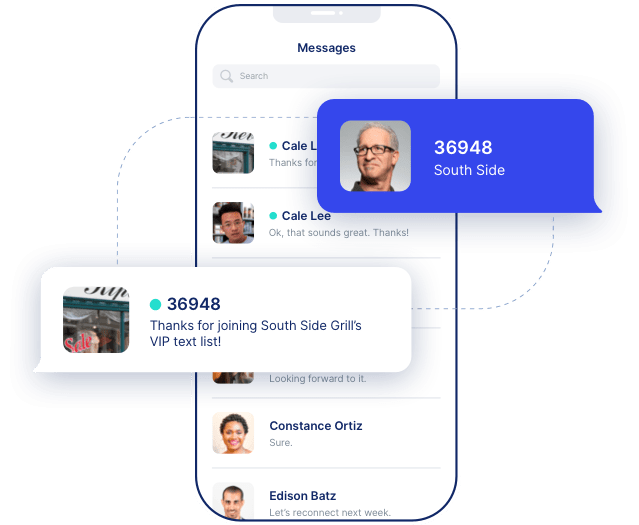
SMS short codes do not work universally in every country. They have to be provisioned for each country that you want to send and receive text messages in. This is because each country has a different set of carriers and network operators to provision your code.
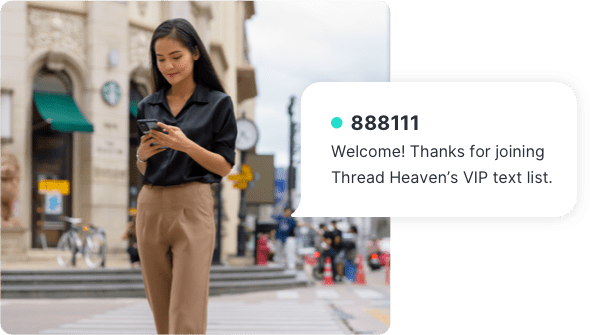
As an example, if you wanted to secure the short code 888111 for use in the United States, you’d also have to provision the same code in Canada. Doing this would give you full North American short code coverage. It would also create a seamless short code texting experience. You would, however, be responsible for the cost of two codes. One for each country.
Selecting a short code service is one of the most important decisions you'll make for your text messaging program. Most organizations work with an SMS marketing platform that handles everything from provisioning your code to powering your daily campaigns, which means this partnership will define your entire texting experience.
Look for a provider that checks these boxes: user-friendly software, comprehensive features, and exceptional customer support. However, the most critical factor is often overlooked—message deliverability. Some services use low-quality routes that cause your messages to fail silently, never reaching your subscribers. Always discuss delivery rates, carrier relationships, and messaging infrastructure with any service you're considering.
If you already have a short code and want to switch from one mass texting service to another, you can certainly do so. Some text messaging services may make it seem difficult or even tell you that it's not possible to transfer SMS short codes, however, that couldn't be farther from the truth. The fact is that it's totally doable and the wireless carriers are completely fine with it.
Every short code transfer will depend on who your current texting service is and who their SMS aggregator is. The good news is that most short code moves can be done with little to no downtime. If done correctly, your subscribers won't even notice the change.
Apply for a Short Code
With all of the group texting solutions out there, why would you choose SlickText as your SMS short code service? There are hundreds of reasons. Here are a few:
We take the hard work out of provisioning your own SMS short code. From obtaining the code itself, to submitting the carrier applications and getting it connected, everything is handled by us, for you.
While some services will limit your short code's throughput or send rates, our platform is built on an incredibly strong infrastructure that can support sending hundreds of text messages per second per code.
Some SMS services save money by using low quality methods to send your messages. That just leaves people not getting your texts. We use the best possible North American messaging routes to ensure your text messages are delivered.
Here are some of the most common questions we get regarding SMS codes and short code texting.
Random short codes cost $500 per month. Vanity short codes cost $1,000 per month. Both require a one-time carrier setup fee and a minimum monthly plan of $319.
Random short codes are chosen at random and you're assigned a 5 or 6 digit text code. Vanity short codes are text codes in which you can choose from a list of available numbers. Both short code types are 100% equal in terms of their functionality and capabilities.
Unlike standard phone numbers, each short code must be individually approved by all major wireless carriers—a process that takes 4-6 weeks and involves thorough vetting of your business and messaging practices. This approval gives you exclusive benefits: no carrier filtering, sending speeds of 500+ messages per second, and significantly higher deliverability.
You're also paying for a scarce resource. The 5-6 digit number pool is far smaller than 10-digit numbers, and short codes are managed as premium assets by the U.S. Short Code Administration. Plus, short codes carry inherent credibility—consumers recognize them as legitimate business numbers used by major brands, which translates to higher open rates and better engagement.
Text a short code exactly like any phone number—just type the 5-6 digit code and send your message. The shorter number makes it faster to type.
Most businesses can obtain a short code. However, carriers prohibit content related to SHAFT: sex, hate, alcohol, firearms, and tobacco. Businesses in these or other high-risk categories may face approval challenges. Consult with your SMS provider to understand your specific eligibility.
A short code audit happens when a carrier or auditing agency on behalf of the carriers tests your short code. Audits sometimes discover violations that require a resolution. Violation severity depends on the issue. It could be anything from forgetting to include opt-out instructions when people opt in to your text code to sending message content that violates carrier guidelines. The majority of short code audits are minor issues and simply require you to update basic verbiage.
The industry average timeline for provisioning a short code is between 6 and 8 weeks; however, with our strong carrier relationships and best practices we consistently activate our client's short codes up to 2 to 3 weeks faster.
A great alternative to using a dedicated short code is a 10-digit toll-free number. Toll free numbers are free, nearly immediately available, and can send at high speeds. They are the next best option if you’re not willing to pay for a dedicated short code.
Yes, you can transfer your short code between SMS providers. Despite what some services might claim, moving short codes is a standard, carrier-approved process. The specific steps and timeline vary based on your current provider and their aggregator, but most transfers happen with little to no service interruption. Your subscribers will continue using the same short code throughout the transition. When evaluating new providers, ask about their experience with short code migrations to ensure a smooth transfer.
Short codes send 500+ messages per second (MPS). This ensures high-volume campaigns reach recipients immediately at your intended send time.
No. Short codes typically avoid carrier filtering because your content is pre-approved during the application process. Carriers may review your content only if they receive high spam complaints or during a compliance audit.
All short code texting services are required to process special “opt out keywords” that will immediately take you off any texting list that uses a short code. If you text STOP, END, CANCEL, QUIT, or UNSUBSCRIBE to any SMS code, you should receive an immediate response confirming that you’ve been opted out.